
If you want the short answer: Start Weekly. Weekly emails offer the best balance between staying top-of-mind and avoiding the spam folder. However, “Weekly” is just the baseline. New subscribers should hear from you daily for the first week, while unengaged subscribers should only hear from you monthly. The right answer depends entirely on their behavior, not your calendar.
I learned the hard way that email frequency is not just a schedule—it’s a reputation metric.
A few years ago, during a Black Friday launch, I panicked. I looked at our sales goals and decided the solution was volume. I went from sending two value-based emails a week to two aggressive promo emails a day for four days straight.
The result? I burned the fields.
I made sales, sure. But my unsubscribing rate spiked to 2.5% (a massive jump from my usual 0.2%). Worse, my open rates on the next newsletter dropped by nearly 40%. It took three months of high-value, zero-pitch content to rehabilitate my domain reputation.
Since then, I’ve managed millions of sends for clients, and I’ve found that how often to send emails is a question of “Relationship Equity,” not just days of the week.
Here is the no-nonsense guide to finding your perfect email cadence.
The “Engagement Tier” Strategy: One Rule to Rule Them All
Most marketers make the mistake of treating every subscriber equally. They blast the same message to the guy who signed up yesterday and the guy who hasn’t opened an email since 2022.
This kills deliverability.
My rule is simple: Recency determines Frequency. I segment my lists into three specific buckets.
1. The VIPs (Opened in last 30 days)
These people are hot. They are reading what you write.
- Frequency: 2-3x Weekly.
- Content: Everything—Newsletters, promos, “quick thoughts,” and beta offers. They have signaled they want high contact.
2. The Warm Leads (Opened in last 30-90 days)
They are interested, but they aren’t superfans yet. Do not annoy them with daily updates.
- Frequency: Weekly Only.
- Content: Best-of content and major announcements. No “daily musings.”
3. The Cold Storage (No opens in 90+ days)
These are dangerous. If you email them too often and they don’t open, Gmail and Outlook will start marking all your mail as spam.
- Frequency: Monthly or Quarterly.
- Content: The “Re-engagement Campaign.” If they don’t click this, I scrub them. I do not waste deliverability reputation on ghosts.
Key Takeaway: Never set a global frequency for your whole list. High engagement earns high frequency; low engagement earns silence.
The “Frequency Ramp-Up” (Why New Leads Need More)
While “less is more” applies to old leads, the opposite is true for new ones.
We recently ran an audit on a client’s 14-day welcome sequence. Originally, it sent one email every three days. It felt polite. It felt safe.
It was also losing money.
We realized that when someone hands over their email address, their interest is at its absolute peak. They want the solution immediately. Waiting three days between emails just let them cool off.
We tightened the sequence to daily emails for the first 5 days.
The Win: The conversion rate on the introductory offer increased by 18%. It turns out, new leads didn’t view daily emails as spam; they viewed them as helpful momentum.
Recommended Cadence by Lifecycle Stage
|
Lifecycle Stage |
Recommended Frequency |
Goal |
|---|---|---|
|
Onboarding (Days 1-7) |
Daily |
Establish trust & deliver the lead magnet. |
|
Nurture (Days 8-30) |
2-3x Weekly |
Deepen the relationship. |
|
Standard Retention |
Weekly |
Stay top-of-mind without annoyance. |
|
Launch/Promo |
Daily (for 3-5 days) |
Drive urgency for a specific offer. |
|
Re-Engagement |
Monthly |
Verify if the email is still active. |
Industry Benchmarks: How Often to Email Subscribers by Sector
Context is king. A daily email from a news outlet is expected; a daily email from a plumbing software company is harassment.
1. B2B & SaaS (The “Educational” Approach)
- Frequency: Weekly or Bi-weekly.
- Why: B2B sales cycles are long. Your goal is authority, not impulse buys. If you email daily, you look desperate.
- Best Practice: Send a “Weekly Roundup” or a specific “Tuesday Tutorial.”
2. E-commerce (The “Promo” Approach)
- Frequency: 2-3x Weekly.
- Why: E-commerce relies on visuals and impulses. You need to catch the user when they are ready to buy.
- Best Practice: Segment heavily. If they clicked “Shoes” but didn’t buy, send them two emails about shoes that week. Do not send them emails about Hats.
3. Creators & Personal Brands
- Frequency: 2x Weekly to Daily.
- Why: You are the product. People subscribe to hear your voice.
- Best Practice: A “Daily Tip” works here if the content is genuinely good. If you are just pitching, they will unsubscribe instantly.
ActiveCampaign – Best for Managing Frequency
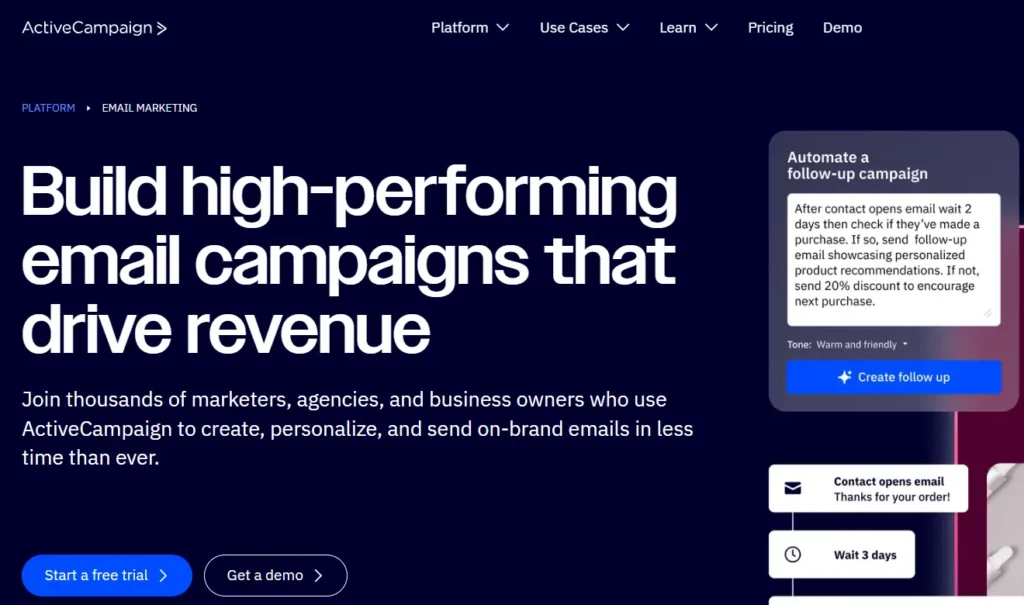
If you are going to implement the “Engagement Tier” strategy I mentioned above, you cannot do it manually. You need an ESP (Email Service Provider) that handles the logic for you.
For B2B and SaaS businesses requiring this level of granularity, ActiveCampaign is my go-to.
Who Is It Really For?
Marketers and Business Owners who need “Logic-Based” emailing. If you just want to send a blast to everyone, this is overkill. If you want to say, “Send this only if they clicked the last email,” this is for you.
The Killer Feature (That Actually Matters)
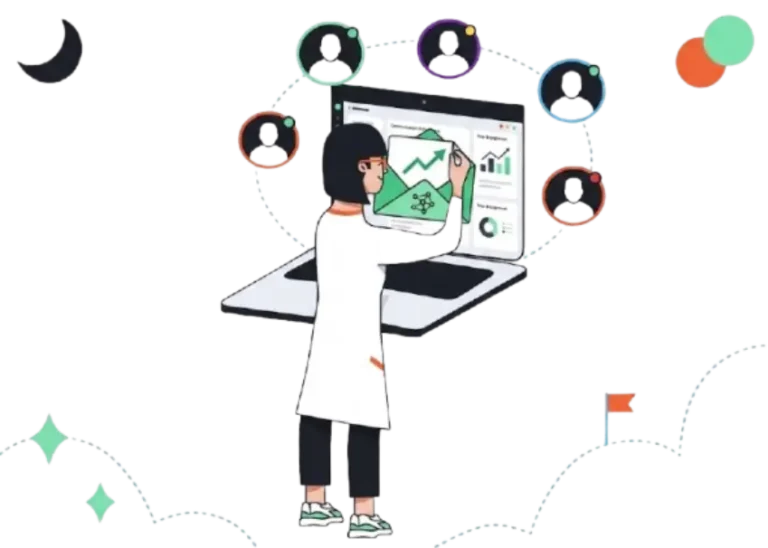
Predictive Sending. ActiveCampaign uses machine learning to analyze when your specific contact opens emails. If John opens emails at 8 AM and Sarah opens them at 4 PM, AC can hold your newsletter and deliver it to each person at their optimal time.
Pricing at a Glance (As of 2026)
- Starter: ~$15/mo. Good for basic newsletters.
- Plus: ~$49/mo. Adds the landing pages and advanced reporting.
- Professional: ~$149/mo. For teams needing predictive sending.
Pros & Cons
|
Pros |
Cons |
|---|---|
|
Incredible visual automation builder. |
The learning curve is steep for beginners. |
|
“Predictive Sending” increases open rates. |
The CRM feature can feel clunky compared to Salesforce. |
|
easy segmentation based on engagement. |
Price jumps significantly as your list grows. |
The Smartest Way to Get Started
Don’t try to build a complex 50-step automation on day one. Use their “Engagement Tagging” recipes. These are pre-built automations that automatically tag subscribers as “Engaged” or “Disengaged” so you can filter your blasts immediately.
Final Verdict
Buy. If you are serious about segmentation and protecting your sender reputation, the cost is worth it.
Who Should Avoid It?
Simple Newsletter Creators. If you are a writer who just wants to send text emails, use ConvertKit (Kit) or MailerLite. ActiveCampaign is too heavy for simple newsletters.
Unsubscribe Rate and Email Frequency: The Hidden Costs
There is a “Cost” to sending emails that isn’t on your invoice. It’s called List Fatigue.
When you search for email marketing frequency best practices, you will see advice saying “send more to sell more.” This works, until it doesn’t.
If you push your frequency past the “Trust Threshold,” two things happen:
- The Silent Unsubscribe: People stop opening your emails but don’t bother clicking unsubscribe. This destroys your open rate metrics and signals to Google that you are spam.
- The Rage Quit: This is when users mark you as spam. A spam complaint rate over 0.1% (that’s 1 in 1,000) puts your account in the danger zone.
Demystifying The “Cost” of Volume:
- Low Volume (Monthly):
- Risk: They forget who you are.
- Cost: Low revenue, high “cold” re-activation costs.
- High Volume (Daily):
- Risk: High churn. You must constantly pour new leads into the funnel to replace the ones leaving.
- Cost: High content production costs and potentially lower domain health.
Your Action Plan: 5 Steps to Fix Your Frequency
If you are unsure where to start, do not guess. Follow this plan.
- The “Pulse” Audit: Look at your last 5 emails. What is the average open rate? If it’s below 20%, your list is tired, or your content is boring. Pull back frequency.
- Clean the List: Run a re-engagement campaign immediately. Identify anyone who hasn’t opened in 90 days. Ask them if they still want to be here. If they don’t click, delete them.
- Segment by Recency: Create the “VIP” and “Warm” segments in your ESP (ActiveCampaign, Klaviyo, etc.).
- Test the “Tuesday/Thursday” Rule: If you are currently sending ad-hoc, switch to a consistent Tuesday and Thursday schedule for two weeks. Measure the engagement against your baseline.
- Automate the Welcome: Set up a 5-day daily drip for new signups. This is the safest place to increase frequency without backlash.
What To Do Next
Go to your Email Service Provider right now and look at your Unsubscribe Rate for your last campaign.
- Below 0.5%? You have room to send more often.
- Above 0.5%? You are sending too much, or your content isn’t relevant. Pause and reassess.
FAQ
1. What is the best day of the week to send emails?
Data consistently shows Tuesday, Wednesday, and Thursday have the highest open rates for B2B. For B2C and creators, Sunday mornings often perform surprisingly well because inbox competition is lower.
2. Does email frequency affect SEO?
Indirectly, yes. If you drive consistent traffic to your blog via email, those “user signals” (time on page, returning visitors) tell Google your site is valuable. However, email itself does not pass “link juice.”
3. How often should I send a newsletter?
For a standard newsletter, weekly is the gold standard. It creates a habit loop. Monthly is too infrequent to build a habit; daily is too demanding for most readers to keep up with.
4. Should I ask subscribers how often they want to hear from me?
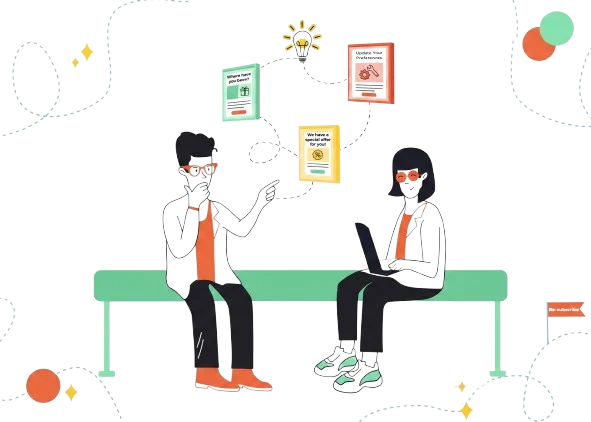
Yes. This is called a “Preference Center.” In your footer, allow users to “Opt-down” (e.g., “Switch to Weekly Digest” instead of “Unsubscribe”). This saves subscribers who like you but are just overwhelmed.